Author: eltonpicolhes@yahoo.com.br

  • Spending More Time Outdoors: A Practical Guide

    Spending More Time Outdoors: A Practical Guide

    Almost everyone agrees that being outdoors is good for you. Almost everyone also spends most of their week indoors. This is not a contradiction so much as a structural problem: modern life is built indoors, work is indoors, food is delivered indoors, entertainment is indoors, sleep is indoors. The path to being outside is not lined with obstacles; the obstacles have to be invented in the form of a deliberate plan.

    This piece is about how to do that without turning being outdoors into another item on the list. Not a hiking project. Not a relocation. Just the modest, repeatable adjustments that take the average week from mostly inside to noticeably more outside, and what changes when they do.

    Start with the minutes you already have

    Most people who would like to spend more time outdoors do not need to add hours to their week. They need to redirect minutes they were already going to spend somewhere. The coffee on the doorstep instead of at the kitchen table. The phone call from the bench by the corner shop. The five minutes between work and dinner spent standing in the garden rather than walking to the fridge.

    These reclaimed minutes are not impressive in isolation. Over a week, they add up to a measurable shift in how much daylight the eyes have seen and how much fresh air the lungs have actually moved. The body notices both.

    The morning light is doing real work

    The single most underrated outdoor habit is fifteen to twenty minutes of early-morning daylight, ideally within the first hour or two of being awake. The brain uses this light to set the day’s internal clock, which then governs energy, mood, and sleep that night. The light does not have to be bright sun; an overcast morning still delivers many times the light intensity of a normal indoor space.

    The practical version is small. The walk to the bus instead of the underground. The coffee taken on the step, the porch, or the balcony. The fifteen minutes around the block before the day starts. These are not heroic adjustments. They are the most efficient lever in this entire piece, and they cost the day almost nothing.

    Build outdoor time into something you were going to do anyway

    Outdoor time that has to compete with the rest of life usually loses. Outdoor time that is attached to the rest of life usually wins. The phone call you take while walking around the block. The lunch eaten on a bench rather than at the desk. The conversation you have on the porch rather than the sofa.

    None of this requires turning yourself into someone who hikes on weekends. It requires noticing the times when you were going to do something anyway, and asking whether it could happen outside. About a third of the time, the honest answer is yes — and the small reshuffle adds a remarkable number of outdoor minutes to a week that never had room for them.

    The weekend long walk is worth defending

    A weekly walk that lasts at least an hour, ideally somewhere with trees or water or both, is one of the most reliable mood-and-energy levers a person can pull. The science on this is interesting and ongoing, but the practical case is straightforward: most people who do it consistently report a calmer relationship with the week that follows, and most people who skip it for a month start to feel it.

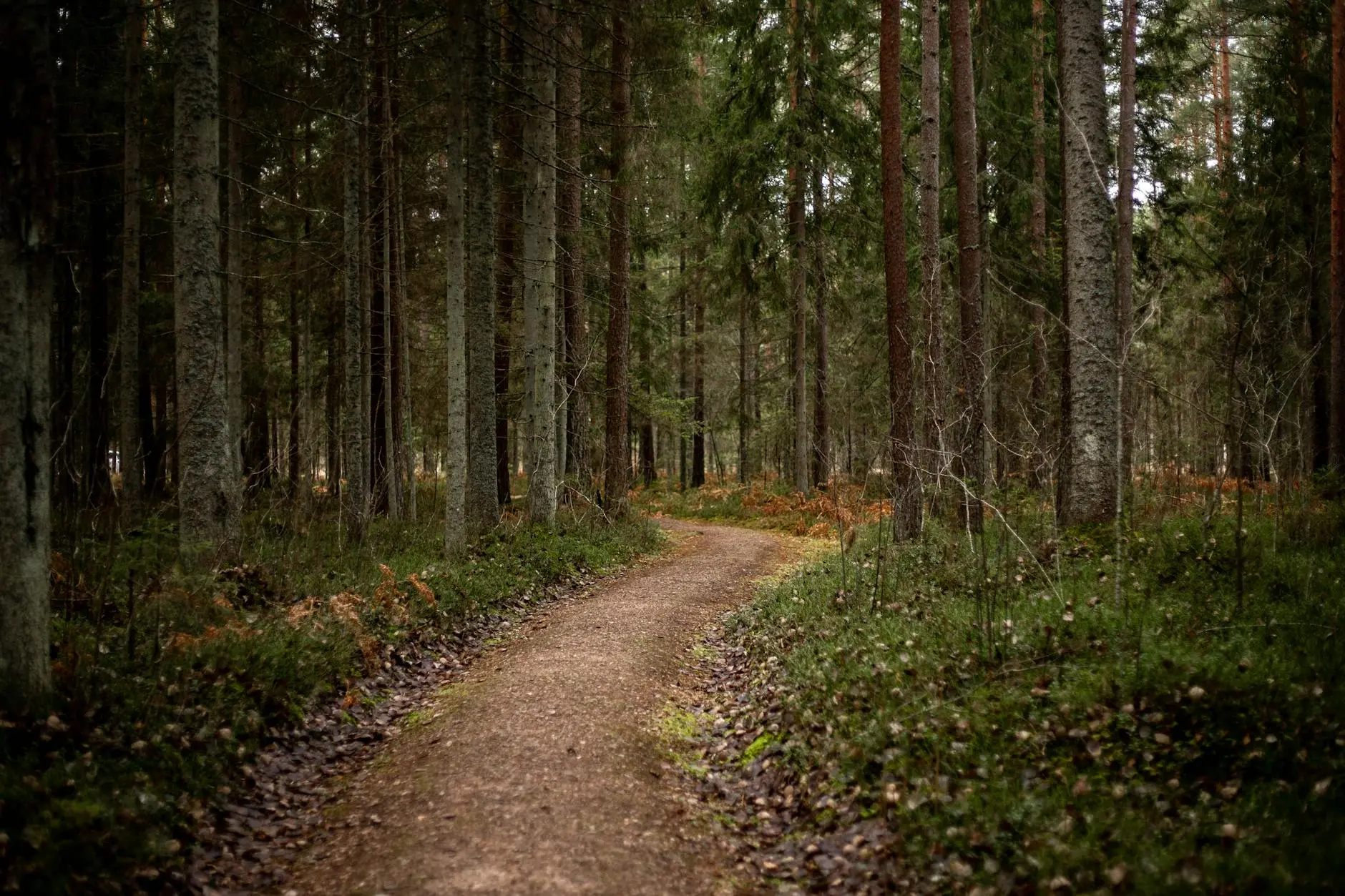
    The walk does not have to be ambitious. It does not have to be a trail. A loop through a park, a stretch along a canal, a wander through a wood — any of these qualifies. What matters is the duration and the cadence, not the picturesque quality of the route. Walking is one of the most underrated forms of exercise for reasons that apply here as well.

    On bad weather and the excuses around it

    Most countries that produce a lot of outdoor culture also have unkind weather. The Scandinavian saying about there being no bad weather, only bad clothing, is annoying because it is true. A coat that genuinely keeps the rain off, boots that do not leak, a hat that does not blow off — between them, these solve the practical objection to being outside in winter for most of the year.

    It also helps to lower the bar. Twenty minutes of cold drizzle is enough to deliver most of the benefit of an hour in summer. The body and brain do not require a perfect afternoon to register that you were outside; they require any afternoon at all.

    Within a few weeks of consistent outdoor minutes — most days, even briefly — sleep starts arriving more easily. Mood becomes a little less spiky. Concentration in the late afternoon improves. None of these effects are dramatic. They are not enough to solve any serious problem on their own. But they are enough to feel like the week is breathing a little better than it was, which is, in the end, the practical case for almost any small habit worth keeping.

    The outdoors is not a treatment. It is closer to a vitamin: cumulative, quiet, and hard to notice until it goes missing for a while. Most people who lose access to it during a hard winter or a stretch of indoor weeks remember exactly what they were missing the next time they get a proper hour outside.

    Related reading

  • Ten Minutes of Stretching a Day: What Actually Changes

    Ten Minutes of Stretching a Day: What Actually Changes

    Stretching is an unglamorous habit. It does not photograph. It is not measurable in any way that satisfies a competitive instinct. There is no leaderboard for it. And yet, of all the small daily practices that quietly improve how the body moves through the world, ten minutes of stretching is among the most consistently underrated.

    This piece is not about flexibility for its own sake. It is not about touching your toes. It is about what the body actually feels like, two months in, when ten unremarkable minutes a day have been spent gently asking it to lengthen rather than tighten. The answer turns out to be more than the practice suggests it should be.

    Why most people stretch wrong, briefly

    Most adult stretching is opportunistic. A quick reach when standing up. A vague twist after a long sitting session. The kind of half-yawn arm extension that the body forgets thirty seconds after the cup of coffee. This is not nothing, but it is not the habit. The habit is dedicated, deliberate, and short — and the short part is the most important.

    Long stretching sessions are not what produces consistent results in non-athletes. Brief, daily sessions are. Ten minutes, repeated, will outperform forty-five minutes once a week. The reason is the same as for any other habit: the body adapts to what it does often, not what it does intensely.

    What ten minutes actually contains

    Ten minutes of stretching is enough for six or seven movements held for forty to ninety seconds each, with a transition between them. It is not a yoga class. It is closer to a small system: a hip opener, a hamstring stretch, a calf stretch, something for the upper back and shoulders, a gentle neck release, and perhaps one targeted move for whatever feels tight that day.

    The order does not matter. The held duration does. The body’s deeper softening happens after the first thirty seconds in a position, not before; a stretch held for ten seconds is a check-in, not a stretch. Patience inside each move is what makes ten minutes effective.

    Where in the day it fits

    Morning stretching feels good but produces less change than evening stretching, because the body is already warmer and looser at the end of the day. That said, the best time is the time it actually happens. People who try to stretch first thing usually find that the slot is fragile; people who stretch while waiting for the kettle, or before bed, find that the habit sticks.

    The trick is to attach it to something that already happens. After the evening walk. While a particular program is on. Before lights-out. The brain forgets to stretch when stretching is a free-floating commitment; the brain remembers to stretch when it is the last thing it does before brushing its teeth. This is the same principle that makes any small daily habit stick.

    What actually changes, in plain terms

    At three or four weeks, the most common change is a small but real one in posture. The shoulders sit a little lower. The neck moves more freely. Tying shoes feels less negotiated. By six to eight weeks, most people notice that an ordinary day — long sitting, awkward sleeping position, a heavy bag — produces less low-grade ache than it used to.

    This is not because the body has been transformed. It is because the body has been gently nudged out of a default shape that years of office chairs, beds with too many pillows, and unconscious slouching have built. The stretches are not adding flexibility so much as returning a baseline that ordinary life keeps pulling away from. The longer the practice continues, the further the baseline shifts, but the bulk of the benefit appears in the first two months, and stays there as long as the practice does.

    A small set of moves, kept simple

    Beginners do well with a small fixed sequence and very little variation for the first month or two. A hip flexor stretch, kneeling, ninety seconds per side. A seated forward fold, sixty seconds. A wall calf stretch, sixty seconds per side. A doorway chest stretch, sixty seconds. A gentle seated neck side-bend, thirty seconds per side. Nothing exotic.

    Once these become automatic, the body will tell you what to add. The right next stretch is almost always the one that feels good when you accidentally do it during the day. That is the body’s quiet way of saying, more of this would help.

    Stretching is also the habit that handles a missed day better than almost any other. Two days off does not undo two weeks on. A week off does not undo a month on. The body is forgiving in a way that strength training is less so. This makes stretching the natural habit to bring back first after illness, holiday, or any other interruption.

    None of this is meant to be a flexibility program. It is a low-effort, high-consistency way of keeping the body from quietly stiffening into the default shape that office chairs, sofas, and beds insist on. Ten minutes a day, almost every day, is enough to keep ahead of that drift. That is the entire promise, and over a few months it turns out to be enough.

    Related reading

  • Walking: The Most Underrated Form of Exercise

    Walking: The Most Underrated Form of Exercise

    Walking has a public-relations problem. It is too cheap to sell, too quiet to photograph, and too obvious to feel like advice. People want to be told to do something that costs a hundred and forty dollars a month and takes a video to capture. Walking is none of those things, which is roughly why it does not get the credit it should.

    The case for walking is unromantic and overwhelming. It does most of what harder exercise does, costs nothing, has almost no learning curve, and survives the excuses that pull people out of every other plan within six weeks. This piece is a quiet argument for putting it back at the center of how you move.

    What a daily walk actually changes

    A consistent walking habit, even thirty minutes a day at an ordinary pace, produces a list of effects that would sell out a class if anyone had a way to package it. Steadier energy. Easier sleep. Lower background stress. Better digestion. A noticeably calmer relationship with food. A measurable, if modest, improvement in cardiovascular function. None of these come in one heroic week, but all of them come in a few months.

    The reason walking works is not magic. It is consistency. The hardest thing in any exercise routine is showing up, and walking is the one most easily shown up for. Bad weather, tired evenings, busy weeks — none of them stop a walk, because the bar to begin one is roughly opening the front door. Showing up consistently for years, even at thirty minutes a day, compounds into something most six-week plans cannot match, and at no marginal cost.

    It survives the excuses other exercise does not

    Running is excellent, but it requires a particular relationship with the body. Lifting is excellent, but it requires a gym, kit, or both. Cycling is excellent, but it depends on roads, weather, light. Each of these has a non-zero activation cost. Skip the kit, skip the route, skip the booking — and you skip the session.

    Walking has almost none of that. The kit is what you put on to leave the house in normal life. The route is the road outside. The session is starting and not stopping for thirty minutes. That is why walking endures. It is the exercise that gets done in a week with a head cold, a deadline, a thunderstorm, a sleepless night, and a teenager’s birthday. Whatever else is happening, the walk fits.

    The pace matters less than the duration

    There is a small school of thought that says a walk has to be fast or it does not count. This is not strictly wrong, but it is also not the point. A brisk walk has cardiovascular benefits that a stroll does not. A stroll has benefits that staying on the sofa does not. The choice between brisk and slow is not the choice that matters; the choice between walking and not is.

    For most people, a comfortable steady pace, sustained for thirty to sixty minutes most days, is the right answer. If you want to add a few brisker stretches — the second hill, the fast block before the corner — they bring a useful extra. They are not the difference between a good habit and a bad one.

    Where the walk goes matters too

    The walk that survives is usually the walk that does not feel like a workout. A loop around an unattractive industrial estate, performed because the watch insisted on a step count, gets dropped within a month. The same walk, redirected through a park, a riverside, a quiet residential road with old trees, becomes something the person looks forward to.

    This is not aesthetic snobbery; it is structural. The brain remembers where it has felt good and pulls you towards it. Walking near water, near trees, in light that is not fluorescent — these are not luxuries. They are what makes the habit pull rather than push. Walking close to nature, even an urban version of it, is one of the simpler ways to spend more time outdoors.

    A note on what walking is not

    Walking is not a substitute for everything. If your goal is significant muscle gain, you need resistance. If your goal is a particular athletic skill, you need the practice that goes with it. Walking is also not a magic eraser for a diet that is not working. Honesty about this is part of the case — overclaiming for walking would undermine the real argument, which is modest, durable, and rests on the long view.

    What walking does, reliably, is sit underneath the rest of your life as a base layer of movement that almost nothing else can match for cost, convenience, and the chances that it actually happens. That is more than enough.

    The other thing walking is not is competitive. There is no leaderboard. There is no medal for the year of consistent thirty-minute loops. The reward is unphotogenic and entirely yours. That is, in the end, what makes it durable: nothing about the practice asks for an audience, which means nothing about the practice can be taken away by one.

    Related reading

  • Reading Habits That Stick: How to Finish More Books

    Reading Habits That Stick: How to Finish More Books

    Most people who say they want to read more do not actually need more books. The shelves are already there. The unfinished pile is already there. The good intentions and the bookmark stranded at page forty-seven are already there. What is missing is not material; it is the small set of habits that get a person from I am someone who likes to read to I am someone who reads.

    This piece is about that gap — about the modest, slightly boring changes that turn reading from a thing you mean to do into a thing you do. Nothing here is clever. It just consistently works for people who have been trying to read more and finishing fewer books than they would like.

    Pick a slot, not a goal

    A reading goal is twenty books this year. A reading slot is thirty minutes before bed, every weeknight. The slot wins. The goal floats above the days, threatening at year-end; the slot lives inside them, doing the work.

    Once a slot is fixed, the rest is mechanical. The book lives where the slot does — bedside table, kitchen counter, sofa arm. The slot does not need to be long. Twenty or thirty minutes of focused reading, almost daily, finishes more books in a year than two-hour binges that happen once a month. The goal version reaches December and remembers the number; the slot version reaches December and finds that the books got read along the way without anyone counting them.

    Carry the book, not the phone

    Most stolen reading time is currently going somewhere else. The five minutes in the cafe waiting for a friend. The fifteen on the train. The twenty before a meeting that started late. These small windows are the natural home of a paperback or a Kindle, and they get hijacked by whichever phone notification is nearest.

    The fix is not heroic discipline. It is leaving the book in a coat pocket and the phone in the bag. The brain reaches for whatever is in reach. Make the book the closer object and a surprising amount of accidental reading happens.

    Read more than one thing at once

    The advice to read one book at a time is well-meaning and slightly counterproductive. Most readers who keep up a steady habit have two or three books going: a fiction in the evening, a non-fiction at the kitchen table, a slower one on the bedside for the nights when the brain is too tired for anything else.

    The mix matters because moods change. A bad night with the difficult book is not a sign that you have failed the book; it is a sign that tonight calls for the other one. Having options keeps reading from becoming homework, which is the fastest way to stop doing it.

    Allow yourself to stop

    There is a stubbornness people apply to reading that they apply to almost nothing else. A film that is not working gets switched off without ceremony. A book that is not working gets carried for another two hundred pages out of obligation. The result is that the next book — the one that would have lit something up — never gets reached, because the previous one is still on the bedside table demanding to be finished.

    The pile of unread books is not a backlog. It is a buffet. Give yourself an honest fifty pages. If it is not working, the book stays on the shelf, and you move on. The right book at the wrong time is not the same as the wrong book, but either way, the answer is to keep moving.

    Build a small return system

    What undermines most reading habits is not the time spent reading; it is the time wasted choosing what to read next. The book finishes, the household goes to bed, and there is nothing on the table for tomorrow. By the time something is selected from the shelf two evenings later, the habit has lost momentum.

    A small fix: keep the next book already chosen. The pile beside the bed has the current book plus the next one. When one ends, the other is right there, waiting, no decision required. This is the same logic that keeps any small habit alive — reduce friction more than you increase willpower.

    What changes after a few months

    The first thing that comes back is patience. A page is shorter than a video, but it asks for more sustained attention, and the attention itself gets exercised. The second is taste. With more books in the rotation, the sense of what you like sharpens, and the choosing gets easier. The third, slowly, is identity: the small but real shift from I should read more to I am reading something good at the moment, which is what most people meant in the first place.

    A side effect that surprises most returning readers is how the rest of the screen-time question quietly answers itself. The phone gets reached for less, not because it has been banned, but because there is now a more interesting alternative on the bedside table. A book competes with a phone better than any willpower ever did.

    Related reading

  • Why Hobbies Are an Investment, Not a Luxury

    Why Hobbies Are an Investment, Not a Luxury

    There is a slow erosion that happens in adulthood. The week shrinks down to work, errands, and recovery from work. The thing you used to do every Sunday morning happens once a quarter, then once a year, then not at all. Nobody decides this. It just settles in, the way moss does on an unused stone, until the line between you and your job has become a little thinner than you would have liked.

    Hobbies are the corrective. Not the curated, productive, side-hustle version, but the real one — the thing you do because doing it returns you to yourself. This piece is a small case for taking yours seriously enough to defend, even when nothing about your week makes that easy.

    What a hobby actually does

    A hobby is one of the few things in an adult life that asks something of you without paying you for it. There is no deadline. There is no audience that has to be satisfied. There is no version of doing it badly that costs anything. What it produces, instead, is an hour or two of being absorbed in something where the only stakes are whether the thing in front of you gets a little better.

    That state — absorbed but unjudged — is rare in normal life. Work has stakes. Family has stakes. Friendships have stakes. A hobby is one of the only places where the only stakes are the ones you choose to set, and that turns out to be unexpectedly restorative.

    The investment is in the version of you that is not your job

    Most adults can describe themselves through their job in a sentence and struggle to describe themselves outside of it in a paragraph. That is not vanity; that is the slow narrowing of what we do with our weeks. A hobby, kept up for years, is an investment in the part of you that is not your job — the part that, when something happens to the job, is still there.

    This sounds melodramatic until it is not. Illness, redundancy, retirement, family changes — at some point in most lives, the structure that has carried the identity gets shaken. The people who navigate those stretches best almost always have something else they have been quietly tending all along.

    Why no time is rarely the real problem

    Most people who say they have no time for a hobby do, in fact, have time. They have an hour after dinner. They have a Sunday morning. They have the half-hour they currently spend scrolling, which would shock them if they added it up at the end of the week. The reason the time does not turn into a hobby is not scarcity; it is that the time is unprotected.

    A hobby needs a slot. Not a strict appointment, but a default. Tuesday evenings, the kitchen table, after the children are asleep. Sunday mornings, the workshop, before anyone is awake. The slot is the hobby, in many ways — once it has one, the practice fills it. Without one, the practice never quite starts.

    Starting again is not as awkward as it feels

    People who used to do something and have not done it for years usually carry a small embarrassment about it. The piano, dusty under a sheet. The bike, deflated in the shed. The novel, three chapters in, six years ago. The longer the pause, the more it feels like you would have to apologize to yourself just for picking it up.

    You do not. Whatever the thing is, almost nobody is watching you start again. The piano knows nothing about the years it spent quiet. The page knows nothing about the gap. The only person who notices the return is the one who is allowed to enjoy it — which is you. Begin again at the level you have, not the level you remember.

    Choose one that does not feed back into work

    A hobby that turns into a side hustle is no longer entirely a hobby. The same goes for one that is branded, documented, or shared on a platform. There is nothing wrong with any of these things in their own right, but they are not the same trade. The hobby that returns you to yourself most reliably is the one that does not have to be shown to anyone.

    If you are tempted to choose something productive — a language for the CV, a skill for the career — at least keep a second one that is not. Make room in your life for something that does not have to justify itself. That space is what makes the rest of the week feel like more than just work.

    Not every hobby has to be cheap. But many of the best ones are. Walking. Reading. Drawing. Bread. The garden. The instrument you already have. Cost is almost never the bottleneck; it is permission. Give yourself the permission, and most of the practical objections sort themselves out.

    The first session back is almost always the hardest, and almost always the most disproportionately rewarding. A week later you will not remember it. A month later you will be embarrassed at how much you talked yourself out of doing it for so long.

    Related reading

  • Simplifying Your Life: Less Stuff, More Meaning

    Simplifying Your Life: Less Stuff, More Meaning

    Simplifying gets confused with minimalism, and minimalism gets confused with austerity. The version of simplifying that quietly improves a life is none of those things. It is not a furniture aesthetic, a rule about thirty-three items of clothing, or a competitive sport for people with white walls. It is the slow work of letting fewer things claim your attention, so that what is left can claim more of it.

    The point is not less stuff. The point is less obligation. Most of the noise in an ordinary week comes from things that have asked something of you over time — physical things, digital things, relationships you keep half-alive out of habit. Simplifying is the practice of noticing which of those obligations still earn their place.

    Start with what already drains you

    The most useful first move is not a decluttering weekend. It is fifteen minutes with a piece of paper, writing down the things in your week that consistently take more than they give. The cluttered drawer you avoid. The subscription you no longer use. The recurring meeting that has lost its purpose. The friendship that has become an inbox.

    These are not all the same kind of problem, but they share a structure: they all want something from you, and what they give back has shrunk over time. Naming them is half the work. The other half is choosing which ones to actually do something about, which is almost always fewer than you think.

    Stuff: the easier version of the problem

    Physical clutter is the easiest place to start because the rules are clear. If you have not used it in a year, do not love it, and would not replace it if it broke, it can go. The corollary is also useful: if you have replaced it three times in two years, the previous versions are still in your life somewhere, taking up space.

    You do not need to be ruthless. You need to be honest. A single shelf, a single drawer, a single cupboard at a time, with the goal of having less and feeling less, not having nothing and feeling pious about it.

    The harder version: digital clutter

    Digital clutter is worse than physical clutter because it is invisible. A laptop with eleven open browser windows, an inbox with eight thousand unread, a phone screen with apps in three pages that the owner has not opened in months — none of this looks like a problem from across the room. It feels like a problem the moment you sit down to work.

    A useful rule: tidy the screens you actually look at. A clean home screen on the phone. A clean default browser tab. A clean desktop. The rest can stay messy if it has to; what shapes the day is what you see when you start it.

    The hardest version: obligation clutter

    The hardest things to simplify are not objects but commitments. The recurring catch-up coffee that has become a small dread. The volunteer role you took for one year and have done for four. The streaming service you keep just in case. Letting go of any of these requires a conversation, or at least a moment of letting yourself off the hook.

    It helps to ask, of each one: if it were not already in my life, would I add it today? If the honest answer is no, the next question is what would actually happen if it stopped. Almost always the answer is: less than you fear, and more room for what you do want.

    What you make room for

    The reason to simplify is not to have a cleaner house. It is to have a quieter life with more room for what actually matters: the hobby you keep saying you would do if you had time, the people you actually want to see, the long walk on a Saturday, the book you have been meaning to read for two years.

    Simplifying is a means, not an end. If you trim the obligations and the stuff but nothing more meaningful takes their place, you have a tidier life rather than a fuller one. The point is the trade — less of what does not matter, more of what does. The work of simplifying is, in this sense, also the work of figuring out what you would do with more time, attention, and quiet, and then arranging your life around it.

    There is a flavour of minimalism that turns into a different kind of obligation: counting items, owning nothing in color, photographing empty rooms for the internet. That is not what is being recommended here. A messy desk you love is better than a clean desk you have to maintain. The test of a simplified life is not whether it looks austere; it is whether the obligations have dropped and the breathing room has come back.

    Most people who simplify in earnest end up surprised by what fills the space. A morning that used to be slow and crowded with small chores becomes a morning with thirty minutes of reading. A weekend that used to be spent maintaining things becomes a weekend with one or two long walks. A friendship that used to be a calendar problem becomes an actual friendship again, because there is more of you available to it.

    Related reading

  • The Quiet Power of Eight Hours of Sleep

    The Quiet Power of Eight Hours of Sleep

    Sleep is the boring superhero of self-improvement. It does not photograph well. It cannot be bought in a clever container. It has no protocol that fits on an Instagram square. And yet, of all the levers a person can pull on how they feel, how they think, and how they cope with ordinary life, sleep is the largest and the most consistently neglected.

    Most people who say they sleep enough actually sleep less than they think. Most people who say they cannot get more sleep have just not protected the hours they could. This piece is about the second group — about the modest, slightly inconvenient rearrangements that turn six and a half hours into eight, and what tends to happen when they do.

    What enough sleep actually looks like

    The honest range for adults is seven to nine hours per night, with most people landing somewhere around eight. There are genuine short-sleepers in the world, but they are rare, and they are almost certainly not you. The person who insists they function fine on five is usually functioning at a baseline they have forgotten is suboptimal, because they have not seen the alternative in a long time.

    The simplest test is a week of holiday with no alarm. If you sleep markedly longer than your weekday average, you have a sleep debt. That debt does not get repaid by a single Sunday lie-in; it gets repaid by a string of ordinary nights with enough room for the body to do what it needs to.

    Why it matters more than it photographs

    A genuinely well-slept person is, almost across the board, a noticeably better version of themselves. Patience is longer. Mood is steadier. Attention holds for longer in conversation. Mistakes get caught earlier. Food cravings are quieter. Workouts feel easier. None of this is dramatic; all of it is real.

    The reverse is also true. A short night does not show up in the morning as a single dramatic deficit; it shows up across the day as a small tax on almost everything. Most people who feel mildly off for no clear reason are sleeping less than they should and have stopped noticing.

    The cost is not in the sleep, it is in the evening

    The reason most people sleep less than they should is not that they cannot sleep. It is that the evening fills up. A long dinner. A second drink. One more episode. Twenty minutes of catching up on messages. A scroll that started at ten and ended at eleven-thirty without anybody deciding to extend it.

    Reclaiming sleep starts in the evening, not at the pillow. Pick a bedtime — a real one, with a number on it — and treat the half-hour before it as protected time. Dim the lights. Lower the volume. Put the phone somewhere that requires standing up to reach. The aim is not a ritual; it is a gentle landing, not a hard stop.

    Build the room and the routine around sleep

    The bedroom is the most overlooked tool for sleep. Cooler than the rest of the house. Darker than feels natural at first. Quieter than a household with a television in another room. A bed used for sleep and a little reading, not work, not arguments, not the laptop.

    A small evening routine is even more powerful: the same handful of things, in roughly the same order, around the same time. The brain takes the pattern as a cue and starts down the path before the head touches the pillow. None of this needs to be elaborate; it needs to be repeated. We have a fuller piece on building routines that survive contact with real life, and the same principles apply at the other end of the day.

    What to expect when you reclaim the hours

    The first week of an earlier bedtime is mostly a feeling that you are wasting the evenings. This passes. By the second week, the mornings begin to feel different. By the third, most people report a steadier mood, fewer afternoon crashes, and a quiet sense that something has been put back into place that they did not know was missing.

    None of this is exotic. None of it requires gadgets. It is just the body doing what it has always done when given permission. The hardest part is allowing the evening to end.

    A note on the sleep you cannot control

    Some people do everything right and still wake up at three in the morning. New parents do not get to choose. Shift workers cannot honour a bedtime. Caregivers and the chronically anxious know the ceiling of their evenings far better than any advice column does.

    What follows is meant for the wide middle: people who in principle have an extra hour to give themselves, and have not been giving it. If that is not your situation, take what fits and leave the rest. The point of any advice about sleep is to make life feel better, not to add another failure to the list.

    A useful test, after a few weeks: does the morning start more easily than it used to? If yes, the change is working. If no, the bedtime is still ten or fifteen minutes too late, or the room is brighter or warmer than it needs to be. The body knows. The hard part is listening before it has to shout.

    Related reading

  • Building a Morning Routine You Will Actually Stick To

    Building a Morning Routine You Will Actually Stick To

    Most morning routines you read about online fall apart on contact with a real morning. The five-step waking ritual, the cold plunge, the journaling, the meditation, the structured breakfast — each item is fine in isolation, but stacked together they describe the morning of someone who does not have other people in the house or a job that starts before nine.

    A morning routine that survives a year, and not a two weeks, looks different. It is shorter, lower in ambition, and built around two or three things that genuinely make the day better. Anything else is optional, and that is the point. The trick is to start from what your morning actually needs to do, not from a list of admirable behaviors you read about online.

    Start by asking what the morning is for

    Most failed routines fail because they were designed in the abstract. The person sat down on a Sunday evening, wrote a list of admirable behaviors, and assumed that future-them would execute it. The first useful question is not what should my morning include but what does my morning need to do for the rest of the day to go well.

    For some people the answer is calm — they want to start without urgency. For others it is clarity — they want to know what matters before the inbox tells them. For others it is movement — the body wants something before the chair gets it. Once the answer is named, the routine designs itself, because everything has to either serve that purpose or get cut.

    Keep it shorter than you think

    A morning routine that takes ninety minutes will not survive a head cold, a noisy neighbor, or a Tuesday with an early meeting. A morning routine that takes twenty minutes will. The version that survives is the version that adapts, and adaptation gets harder the more pieces there are.

    Two or three small things, performed almost without thinking, accumulate more than seven things performed once a month. Less is not lazy; less is structural. A long routine asks for commitment every day. A short one runs itself, and is still there during the weeks you do not have the bandwidth for commitment.

    Anchor the routine to something that already happens

    Habit research keeps coming back to the same point: new behavior sticks best when it is attached to existing behavior. The kettle going on is an anchor. Coming back from walking the dog is an anchor. Sitting down with the first coffee is an anchor. The new habit slots in beside it, not before or after it as a free-floating commitment.

    If you want to start journaling, do it while the coffee brews. If you want to stretch, do it after the kettle clicks. If you want to drink a glass of water, leave it on the counter the night before. The anchor does most of the work, because it removes the decision.

    Treat the first hour as a setting, not a sprint

    The morning does not need to be productive. It needs to be a setting that the rest of the day starts from. A short, slow, low-stimulus first hour is more useful than a packed one. Light coming in. Music, or no music. A made bed. A drink in a cup, not in a takeaway lid. None of these things are doing anything in the productivity sense, but they shape the headspace that everything else will be done from.

    The opposite — phone first, news first, email first — quietly sets the day’s nervous system to a higher baseline that nothing else can lower. If you do one thing to a morning routine, defend the first thirty minutes from the screen.

    Build in a single hard rule

    Every routine that survives has one non-negotiable. It does not matter what it is. It can be no phone for the first thirty minutes, or a glass of water before coffee, or stepping outside briefly for natural light, or a quiet five-minute review of what the day actually contains. The rule matters less than the fact that it is fixed.

    A single hard rule turns the routine into an identity. The other items can flex; the hard rule does not. That is what makes the routine portable across travel, illness, and changing seasons. If you build the rest of your day on a few small habits, the morning’s hard rule is the one that holds the rest together.

    When it falls apart, do not start over

    The most fragile morning routine is the one that requires being perfect. A weekend out of town, a child’s bad night, a flu — any of these can break the streak, and a streak-based system treats that as failure. A well-built routine treats it as Tuesday.

    Pick the routine back up where you left it. Skip the parts that no longer fit. Trim back to the hard rule. The goal is not a chain of unbroken days; it is a default state that the morning quietly returns to without negotiation.

    The routines that survive a decade are not the ones that look impressive on paper. They are the ones that survived the years when nothing else about life felt steady. That is the bar — not whether the morning looks good on a podcast, but whether it can carry you through a hard month without breaking.

    Related reading

  • Why Hydration Matters More Than Most People Think

    Why Hydration Matters More Than Most People Think

    Hydration is the most boring health topic in existence. Everyone has heard the advice; nobody really wants to hear it again. And yet, of all the small adjustments a person can make to how they feel during the day, drinking a bit more water remains the most reliable, the most underrated, and the easiest to neglect.

    This is not a piece about miracle benefits. It is a piece about why a mildly under-hydrated state, sustained for years, quietly subtracts from how you live, and how a small amount of attention puts most of it back.

    When people say they tried drinking more water and felt no difference, what usually happened was that they drank more for three days and stopped. The effect of hydration shows up in patterns, not in single afternoons.

    How under-hydration actually feels

    The dramatic version — fainting, severe headaches — is rare in everyday life. What is common is the mild, blurry version: an afternoon energy slump that arrives a little earlier than it should, a vague headache that almost goes away when you concentrate, a flatness of mood that you do not connect to anything in particular. Most people read those signals as tiredness, stress, or simply being middle-aged.

    A surprising amount of that profile improves when daily water intake goes from probably not enough to probably about right. Not all of it. Hydration is not a cure for fatigue, mood, or attention. But it sits underneath all of them as a quiet variable that, when wrong, makes everything else feel slightly off.

    What enough actually means

    The honest answer is that the right amount of water depends on your size, your activity, the weather, and how much fluid you already get from food and other drinks. General guidance is around two liters a day for most adults, more in heat or after exertion. That number is a useful target rather than a prescription.

    Two practical signals are usually more reliable than counting glasses. The first is the color of your urine, which should be pale straw — not clear, not dark. The second is thirst itself, used early rather than late; by the time you feel thirsty, you are already a little dehydrated, so a small habit of sipping before you notice need is more effective than chugging when you finally do.

    The morning is doing most of the work

    The single most useful piece of hydration advice is also the simplest: drink a glass of water shortly after waking. The body has just gone seven or eight hours without input. Coffee on top of that is pleasant, but it is not the same thing.

    A practical version of this habit is to leave a glass of water on the bedside table or the kitchen counter the night before. Future-you is far more likely to drink water that is already poured than to make a decision about water at six in the morning. This is the same logic as stacking small habits onto existing routines — the friction has to be smaller than the temptation to skip it.

    Carrying water is the second-biggest lever

    Most under-hydration during the day is structural. The person is not refusing water; the water simply is not in front of them. A refillable bottle within reach changes the math. So does a glass at the desk. So does a kettle that gets used for tea more than once a day.

    If a liter bottle on the desk feels too obvious, a smaller glass that gets refilled three or four times produces the same outcome and feels less like a homework assignment. The point is not the container; it is whether the water is closer than the excuse not to drink it.

    A note on the rest of your fluid intake

    Water is not the only thing that hydrates you. Tea hydrates you. Coffee, despite its reputation, mostly hydrates you. The fluid in soup, fruit, and vegetables counts. The point is not to count grams; it is to notice that drinks other than water still contribute, while sweetened drinks are best treated as treats rather than hydration.

    Alcohol does the opposite. A small amount is harmless; a regular evening pattern shifts the next morning’s baseline noticeably. People who feel mildly worse than they think they should often find that the lever is here, not in the gym or the breakfast menu.

    What to expect, honestly

    The first few days of drinking more water mostly produce extra trips to the bathroom. Within a week, those even out as the body recalibrates. Within two or three weeks, most people notice a small set of changes: less fog in the afternoon, fewer low-grade headaches, slightly steadier mood, faster recovery from ordinary effort.

    These effects are not dramatic. They will not transform a life. But they cost almost nothing, take no special equipment, and accumulate at compound interest. For a habit with that profile, the case is hard to beat.

    The cheapest, dullest, most ignored habit on the planet is also one of the few that quietly returns dividends every single day. That is a worse story than most health advice tells, and a better one to live by. Most lasting changes have this character: small, repeated, slightly boring, and eventually irreplaceable.

    Related reading