Walking has a public-relations problem. It is too cheap to sell, too quiet to photograph, and too obvious to feel like advice. People want to be told to do something that costs a hundred and forty dollars a month and takes a video to capture. Walking is none of those things, which is roughly why it does not get the credit it should.
The case for walking is unromantic and overwhelming. It does most of what harder exercise does, costs nothing, has almost no learning curve, and survives the excuses that pull people out of every other plan within six weeks. This piece is a quiet argument for putting it back at the center of how you move.
What a daily walk actually changes
A consistent walking habit, even thirty minutes a day at an ordinary pace, produces a list of effects that would sell out a class if anyone had a way to package it. Steadier energy. Easier sleep. Lower background stress. Better digestion. A noticeably calmer relationship with food. A measurable, if modest, improvement in cardiovascular function. None of these come in one heroic week, but all of them come in a few months.
The reason walking works is not magic. It is consistency. The hardest thing in any exercise routine is showing up, and walking is the one most easily shown up for. Bad weather, tired evenings, busy weeks — none of them stop a walk, because the bar to begin one is roughly opening the front door. Showing up consistently for years, even at thirty minutes a day, compounds into something most six-week plans cannot match, and at no marginal cost.
It survives the excuses other exercise does not
Running is excellent, but it requires a particular relationship with the body. Lifting is excellent, but it requires a gym, kit, or both. Cycling is excellent, but it depends on roads, weather, light. Each of these has a non-zero activation cost. Skip the kit, skip the route, skip the booking — and you skip the session.
Walking has almost none of that. The kit is what you put on to leave the house in normal life. The route is the road outside. The session is starting and not stopping for thirty minutes. That is why walking endures. It is the exercise that gets done in a week with a head cold, a deadline, a thunderstorm, a sleepless night, and a teenager’s birthday. Whatever else is happening, the walk fits.
The pace matters less than the duration
There is a small school of thought that says a walk has to be fast or it does not count. This is not strictly wrong, but it is also not the point. A brisk walk has cardiovascular benefits that a stroll does not. A stroll has benefits that staying on the sofa does not. The choice between brisk and slow is not the choice that matters; the choice between walking and not is.
For most people, a comfortable steady pace, sustained for thirty to sixty minutes most days, is the right answer. If you want to add a few brisker stretches — the second hill, the fast block before the corner — they bring a useful extra. They are not the difference between a good habit and a bad one.
Where the walk goes matters too
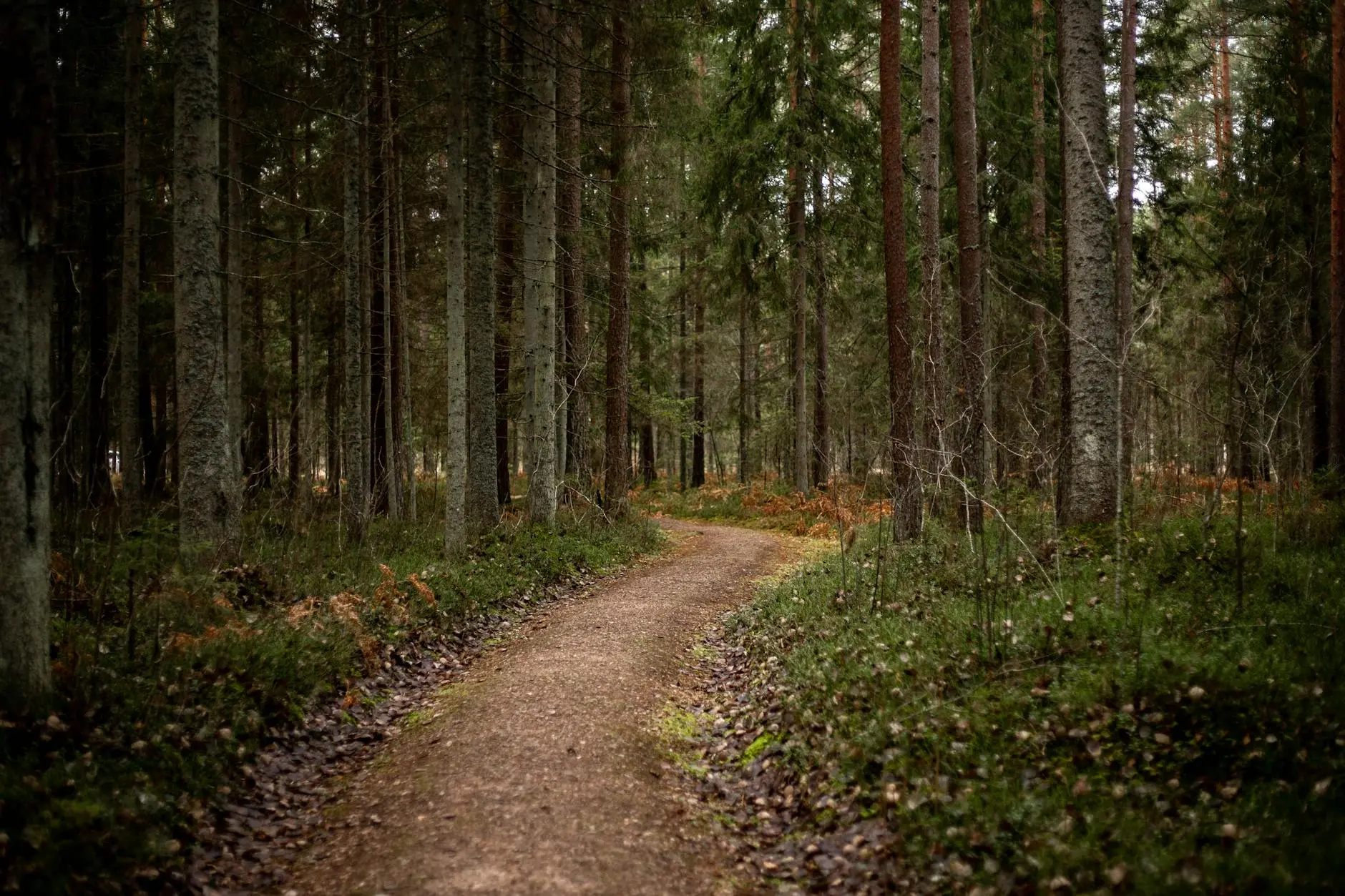
The walk that survives is usually the walk that does not feel like a workout. A loop around an unattractive industrial estate, performed because the watch insisted on a step count, gets dropped within a month. The same walk, redirected through a park, a riverside, a quiet residential road with old trees, becomes something the person looks forward to.
This is not aesthetic snobbery; it is structural. The brain remembers where it has felt good and pulls you towards it. Walking near water, near trees, in light that is not fluorescent — these are not luxuries. They are what makes the habit pull rather than push. Walking close to nature, even an urban version of it, is one of the simpler ways to spend more time outdoors.
A note on what walking is not
Walking is not a substitute for everything. If your goal is significant muscle gain, you need resistance. If your goal is a particular athletic skill, you need the practice that goes with it. Walking is also not a magic eraser for a diet that is not working. Honesty about this is part of the case — overclaiming for walking would undermine the real argument, which is modest, durable, and rests on the long view.
What walking does, reliably, is sit underneath the rest of your life as a base layer of movement that almost nothing else can match for cost, convenience, and the chances that it actually happens. That is more than enough.
The other thing walking is not is competitive. There is no leaderboard. There is no medal for the year of consistent thirty-minute loops. The reward is unphotogenic and entirely yours. That is, in the end, what makes it durable: nothing about the practice asks for an audience, which means nothing about the practice can be taken away by one.